
America's First Muse: Anne Bradstreet
The story of Anne Bradstreet, the first published poet of England's North American colonies.
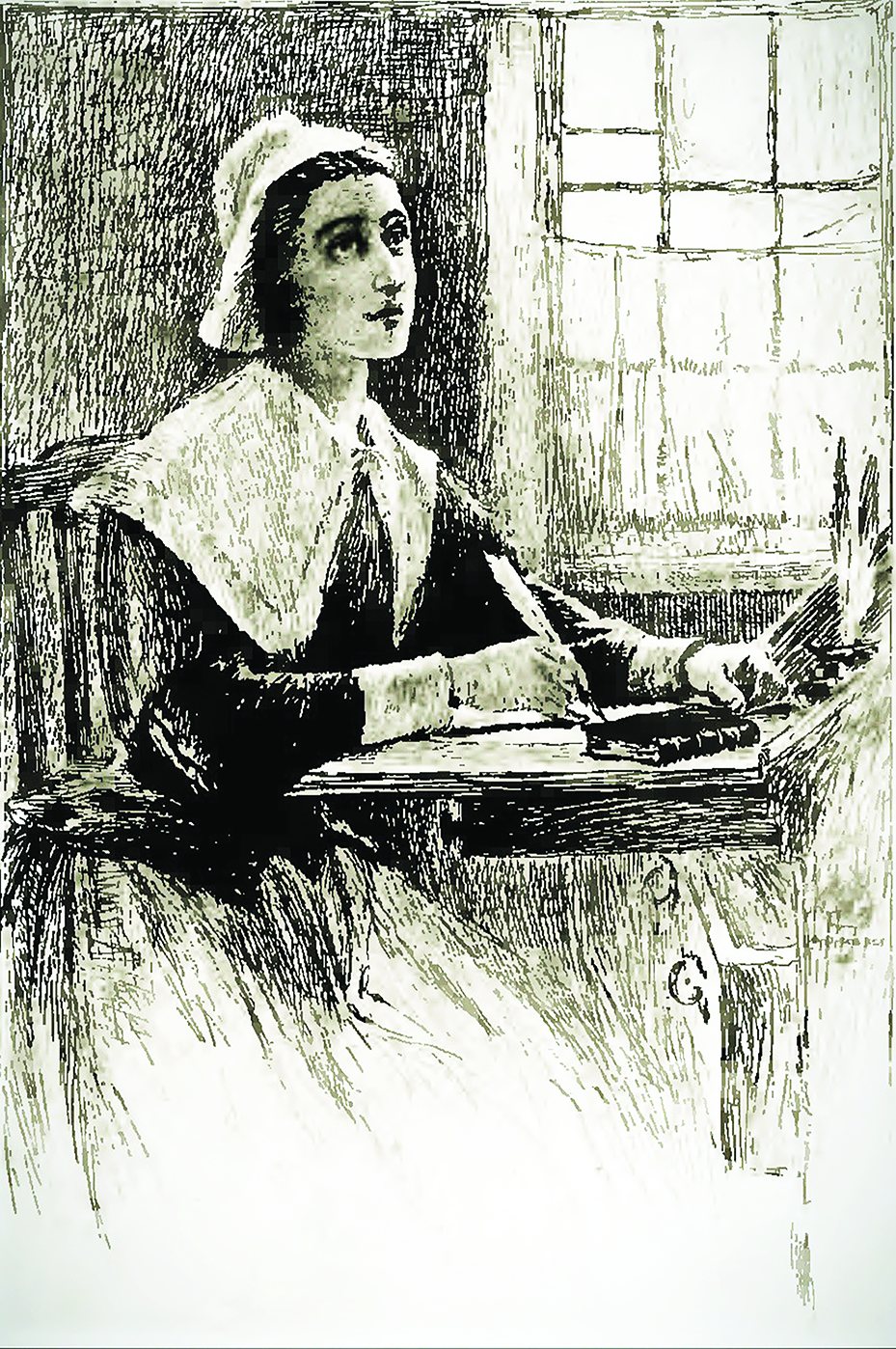
Few people remember this now, but the first page in American poetry was written by a woman.
Anne Dudley was born in 1612 in Northampton, England, to Dorothy York and Thomas Dudley, steward of the Earl of Lincoln. Anne was a well-educated woman for her time and studied literature, history and languages. Because of her family's position, she grew up surrounded by culture and intelligence. When she was 16, she married Simon Bradstreet, and took on the name Anne Bradstreet.
Her childhood and adolescence coincided with religious and political unrest in England. The Puritans had become a significant political force. This led to a serious split within the country, as Puritans did not accept the orders of the Anglican Church, which was striving for total domination. At some point, the Puritans won a majority in Parliament and, seeking to act independently, questioned the authority of King Charles I. This deepened the split and increased political tensions. The king, as head of the Church of England, opposed Parliament, doubting its necessity.
In 1626, King Charles I temporarily dissolved Parliament. The same thing happened the following year. In March 1629, the king dissolved Parliament permanently and introduced a rule allowing the monarch to govern the country without convening Parliament. Many Puritans lost hope for a reform which would live up to their beliefs. So, among the Puritans, the idea arose of mass emigration to a new continent-where they planned to create a society based on their faith.
Anne and Simon, along with Anne's parents, emigrated to America aboard the Arabella. The voyage lasted two months and one week. After leaving England on April 8, they reached the shores of America on June 12, 1630.
They arrived in Salem, Massachusetts, where the Puritans who had arrived several years earlier had already settled.
The Arabella was the flagship of a group of eleven ships known as the Winthrop Fleet, which brought as many as a thousand people to the American colonies during the summer of 1630, including women and children. This group was part of a larger emigration that took place from the 1620s to the 1640s.
This period of great emigration ended after the political landscape changed. During the English Civil War, Charles I surrendered and was handed over to parliament. After a brief escape, he was imprisoned, tried for treason, then executed January 30, 1649 in London.
Some of those traveling to America died along the way. Some returned to England a few months after landing at Salem. However, Anne's family decided to stay and create their life there. Anne's father and her husband were involved in politics; both later served as governors of the Massachusetts Bay Colony.
Due to illness and hunger, many of those who arrived stayed in Salem for a short time-then immediately moved south along the coast to Charlestown, Massachusetts.
After a brief respite, the settlers moved south along the Charles River to found Boston, also called "City on a Hill."
The Bradstreet family soon moved again. This time to the land where Cambridge, Massachusetts is now located. In 1632, Anne gave birth to her first child-Samuel-in Newtown, the name of this city at that time.
Despite her poor health, Anne Bradstreet had eight children and a good social position. Having recovered from smallpox in her youth, Anne again fell victim to disease. In her later years, her joints were paralyzed.
In the early 1640s, Simon and Anne, who was pregnant with their sixth child at this time, moved from Ipswich, Massachusetts, to Andover.
Modern Andover is located south of the site where they moved to.
Anne's father and husband were instrumental in the founding of Harvard University in 1636. Two of her sons graduated from this university.
Her first book was called The Tenth Muse Lately Spring Up in America.
The book was published in England in 1650. Therefore, Anne Bradstreet is not only the first American poet-but also the first poet whose works were published in both the New and the Old World.
The book was published by her half-brother, the Reverend John Woodbridge. She did not intend to draw attention to her works. Having prepared the book for publication, he sent her a letter from London, asking how she wanted to be presented on the cover. She decided not to give her name. The author's name was stated as: "By a Gentlewoman of those Parts."
The book was received very warmly. After a few years it entered the catalog of the most popular books in England, and King George III ordered the purchase of the book for his library.
On July 10, 1666, a fire broke out in the house of Anne Bradstreet, tragically changing her life. The house was burned to the ground, and all her savings were lost-including the unique library with about 800 books on theology, history, literature, medicine and politics.
She was left homeless and without a livelihood. Her health began to deteriorate. Her relatives, including her grandchildren, began to die.
However, despite these hardships, Anne Bradstreet's faith remained unshakable. She believed everything that had happened was a test sent by God, and that her family found their peace in paradise.
She even found the strength to devote one of her poems to this terrible fire, where she argued that everything she lost had never belonged to her-that her house and possessions always belonged only to God, who just for some time allowed her to use His property. At 60 years of age, Anne Bradstreet passed away on September 16, 1672.
She prepared an edition of selected poems which was published in America posthumously, in 1678.
Anne Bradstreet became the most prominent early English poet in North America, as well as the first woman writer in England's North American colonies to have her books published.
Many of Bradstreet's poems were published later, in the 19th and 20th centuries, from a manuscript that was accidentally preserved in the family archive.
"If we had no winter, the spring would not be so pleasant: if we did not sometimes taste adversity, prosperity would not be so welcome."
- Anne Bradstreet
Prologue
To sing of Wars, of Captains, and of Kings,
Of Cities founded, Common-wealths begun,
For my mean Pen are too superior things;
Or how they all, or each their dates have run,
Let Poets and Historians set these forth.
My obscure lines shall not so dim their worth.
But when my wond'ring eyes
and envious heart
Great Bartas' sugar'd lines do but read o'er,
Fool, I do grudge the Muses did not part
'Twixt him and me that over-fluent store.
A Bartas can do what a Bartas will
But simple I according to my skill.
From School-boy's tongue
no Rhet'ric we expect,
Nor yet a sweet Consort from broken strings,
Nor perfect beauty where's a main defect.
My foolish, broken, blemished Muse so sings,
And this to mend, alas, no Art is able,
'Cause Nature made it so irreparable.
Nor can I,
like that fluent sweet-tongued Greek
Who lisp'd at first, in future times speak plain.
By Art he gladly found what he did seek,
A full requital of his striving pain.
Art can do much, but this maxim's most sure:
A weak or wounded brain admits no cure.
I am obnoxious to each carping tongue
Who says my hand a needle better fits.
A Poet's Pen all scorn I should thus wrong,
For such despite they cast on female wits.
If what I do prove well, it won't advance,
They'll say it's stol'n, or else it was by chance.
But sure the antique Greeks
were far more mild,
Else of our Sex, why feigned they those nine
And poesy made Calliope's own child?
So 'mongst the rest
they placed the Arts divine,
But this weak knot they will full soon untie.
The Greeks did nought
but play the fools and lie.
Let Greeks be Greeks,
and Women what they are.
Men have precedency and still excel;
It is but vain unjustly to wage war.
Men can do best, and Women know it well.
Preeminence in all and each is yours;
Yet grant some small
acknowledgement of ours.
And oh ye high flown quills that soar the skies,
And ever with your prey still catch your praise,
If e'er you deign these lowly lines your eyes,
Give thyme or Parsley wreath, I ask no Bays.
This mean and unrefined ore of mine
Will make your glist'ring gold
but more to shine.
To my Dear and Loving Husband
If ever two were one, then surely we.
If ever man were loved by wife, then thee;
If ever wife was happy in a man,
Compare with me, ye woman, if you can.
I prize thy love
more than whole mines of gold,
Or all the riches that the east doth hold.
My love is such that rivers cannot quench,
Nor aught but love from thee,
give recompense.
Thy love is such I can no way repay,
The heavens reward thee manifold, I pray.
Then while we live, in love let's so persevere
That when we live no more, we may live ever.
Her Mother's Epitaph
Here lies
A worthy matron of unspotted life,
A loving mother and obedient wife,
A friendly neighbor, pitiful to poor,
Whom oft she fed, and clothed with her store;
To servants wisely aweful, but yet kind,
And as they did, so they reward did find:
A true instructor of her family,
The which she ordered with dexterity,
The public meetings ever did frequent,
And in her closest constant hours she spent;
Religious in all her words and ways,
Preparing still for death, till end of days:
Of all her children, children lived to see,
Then dying, left a blessed memory.
Her Father's Epitaph
Within this tomb a patriot lies
That was both pious, just and wise,
To truth a shield, to right a wall,
To sectaries a whip and maul,
A magazine of history,
A prizer of good company
In manners pleasant and severe
The good him loved, the bad did fear,
And when his time with years was spent,
If some rejoiced, more did lament.
As Weary Pilgrim
As weary pilgrim, now at rest,
Hugs with delight his silent nest
His wasted limbs, now lie full soft
That mirey steps, have trodden oft,
Blesses himself to think upon
His dangers past, and travails done.
The burning sun no more shall heat
Nor stormy rains on him shall beat.
The briars and thorns
no more shall scratch,
Nor hungry wolves at him shall catch.
He erring paths no more shall tread,
Nor wild fruits eat, instead of bread.
For waters cold he doth not long
For thirst no more shall parch his tongue.
No rugged stones his feet shall gall,
Nor stumps nor rocks cause him to fall.
All cares and fears he bids farwell
And means in safety now to dwell.
A pilgrim I, on earth, perplexed
With sins wth cares and sorrows vext,
By age and pains brought to decay,
And my clay house mould'ring away.
Oh, how I long to be at rest
And soar on high among the blest.
This body shall in silence sleep,
Mine eyes no more shall ever weep,
No fainting fits shall me assail,
Nor grinding pains my body frail,
With cares and fears ne'er cumb'red be
Nor losses know, nor sorrows see.
What though my flesh
shall there consume,
It is the bed Christ did perfume,
And when a few yeares shall be gone,
This mortal shall be clothed upon.
A corrupt carcass down it lays,
A glorious body it shall rise.
In weakness and dishonour sown,
In power 'tis raised by Christ alone.
Then soul and body shall unite
And of their Maker have the sight.
Such lasting joys shall there behold
As ear ne'er heard nor tongue e'er told.
Lord make me ready for that day,
Then come, dear Bridgroom, come away.
More from History
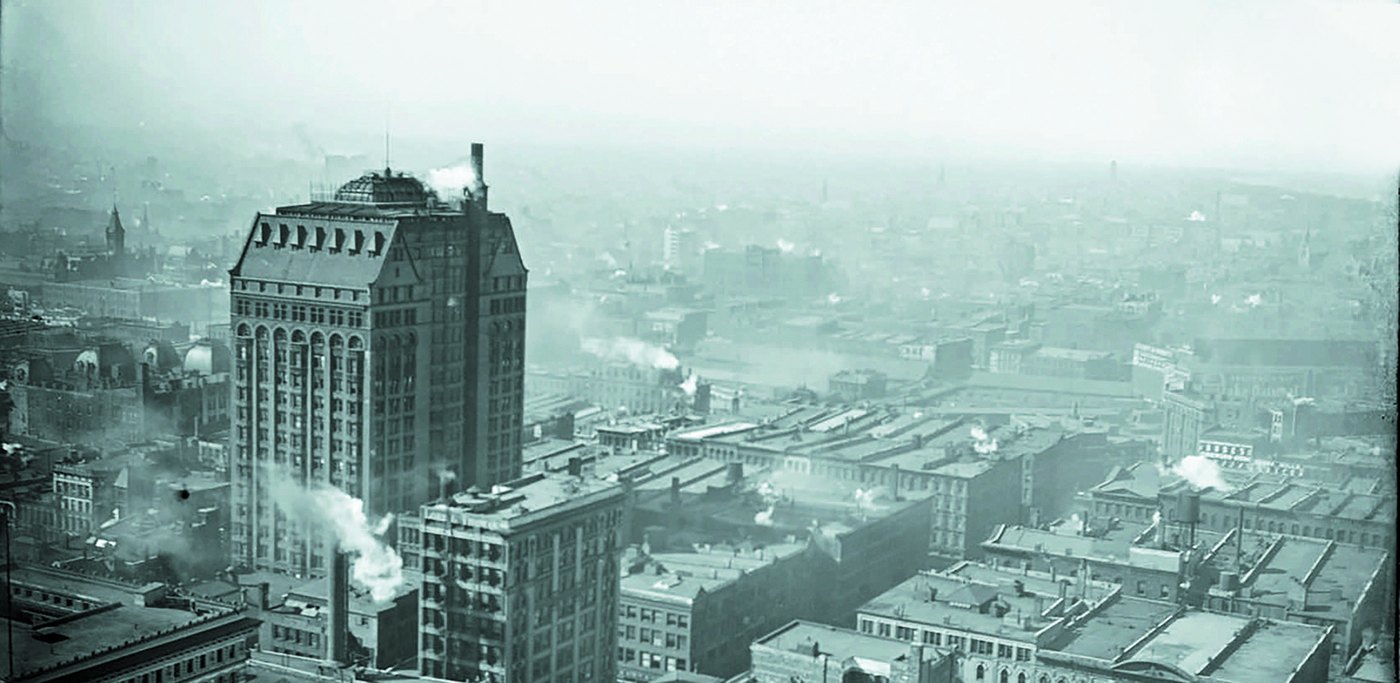
The World's Columbian Exposition and Chicago's Forgotten Temple
A full feature on John Wellborn Root, Burnham and Root, the Masonic Temple, and the Chicago plans around the World's Columbian Exposition of 1893.
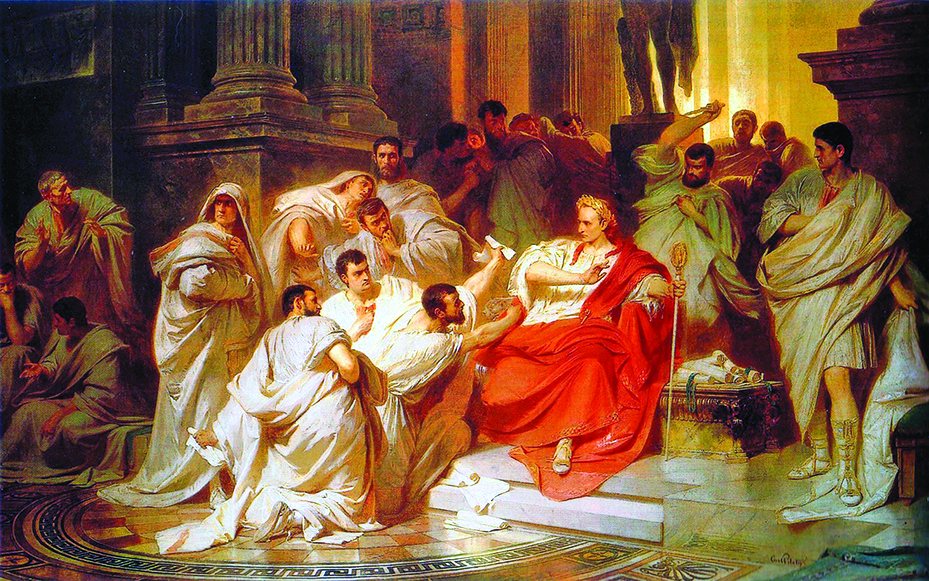
The Job Which Risks Life: Fate of The Emperor
A history feature on research into Roman emperors, violent mortality, and the statistical risks of power.
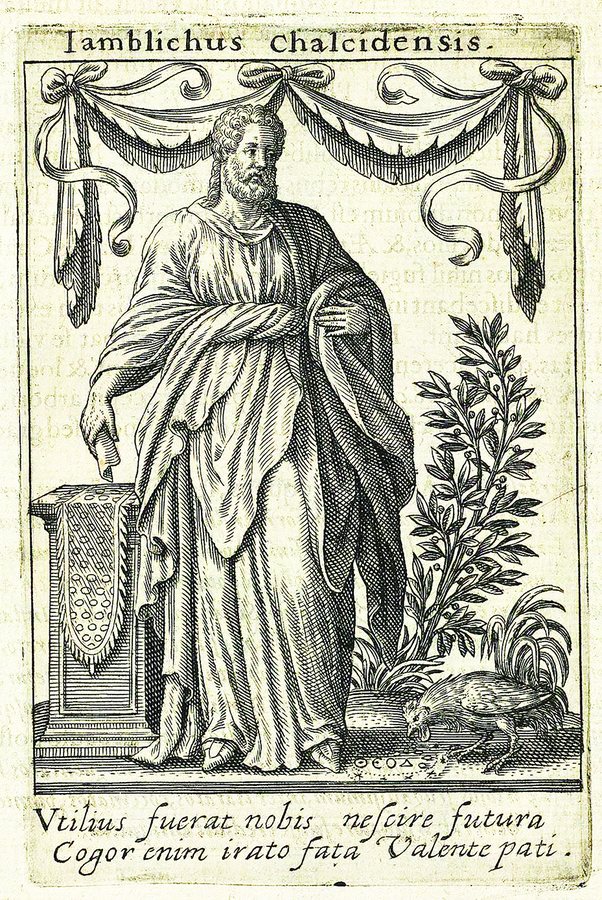
American Archives: Prophetic Dreams and Ecstasy
A historical-philosophical archive excerpt on Iamblichus, prophetic dreams, divination, and altered states of ecstasy.