
At the Head of the Pathocracy
An essay on pathocracy, personality disorders, leadership, and the social need to protect civic institutions.
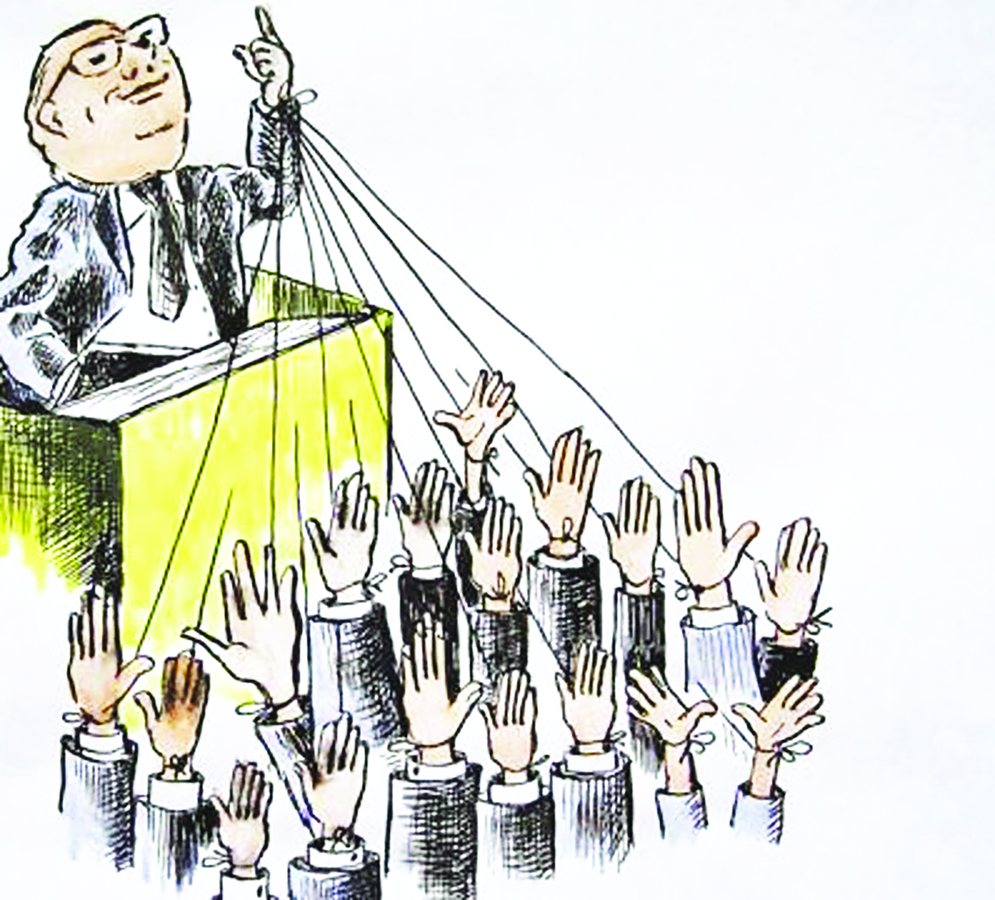
Why are psychopaths and narcissists coming to power?
POLISH PSYCHIATRIST ANDREI LOBACHEVSKY SPENT HIS EARLY YEARS SUFFERING FROM THE NAZI OCCUPATION OF HIS COUNTRY. HIS TERRIBLE EXPERIENCE LED HIM TO DEVELOP THE CONCEPT OF "PATHOCRACY." THE TERM DESCRIBES A POLITICAL SYSTEM IN WHICH PEOPLE WITH PERSONALITY DISORDERS, ESPECIALLY PSYCHOPATHS, ARE EAGER FOR POWER AND LEADERSHIP POSITIONS.
Lobachevsky devoted his life to the study of evil: he wanted to understand why "evil" people seem to thrive, while many good and moral people struggle with varying degrees of success. He sought to find out why people with mental disorders easily rise to leadership positions and seize power in government. Since he himself lived under a pathocratic regime, he risked studying the topic. He was arrested and subjected to psychological pressure. He was able to publish his life's work, Political Ponerology, only after he fled to the United States in the 1980s.
Pathocracy is arguably one of the biggest problems in human history. History is a saga of constant conflict and brutality, as groups of people fight each other for territory, power, and property. Exploring events from ancient times to the 20th century, British historian Arnold Toynbee, author of a 12-volume A Study of History, denounced "the terrible sense of sin that manifests itself in human affairs."
The problem is not that all people are inherently ruthless and cruel, but that a small number of people with personality disorders are ruthless and cruel, highly selfish and lacking in empathy. And this small minority can often come to power and could influence the majority to commit atrocities on their behalf.
STRENGTH AND PATHOLOGY
A minority of people suffer from personality disorders such as psychopathy and narcissistic personality disorder, but they are the ones who truly have an insatiable lust for power. People with Narcissistic Personality Disorder desire constant attention and approval. They feel they are superior to others and have the right to dominate them. They also lack empathy and can ruthlessly exploit and abuse others.
Pathocracy is perhaps one of the biggest problems in human history.
Psychopaths feel a similar sense of superiority and lack of empathy, but they differ from narcissists in that they do not experience the same impulse for attention and adoration. To some extent, the need for adoration serves as a test of the behavior of narcissists who are unwilling to do anything that might make them too unpopular. Psychopaths have no such doubts.
In contrast, people with high levels of empathy and compassion are usually not interested in power. They prefer to communicate and interact with others. They may even refuse a high-status position because they know that a higher status will disconnect them; however, for the non-empath, this is part of the attractiveness of the job. This leaves positions of power wide open to people with personality disorders, or at least to people with high levels of ambition and ruthlessness.
Throughout history, pathological individuals have steadily climbed to the top. To some extent, preindustrial feudal societies limited them-as power was often bequeathed by birth rather than individual effort. The decline of the feudal system was certainly a positive step towards equality and democracy, but one negative consequence is that it gave psychopaths and narcissists more opportunities to gain power.
As Ian Hughes points out in his book Confused Minds, the whole point of democracy is to try to protect the masses from a pathological minority. This was the central idea of the American Constitution and the Bill of Rights: democratic principles and institutions were created to limit the power of pathological individuals.
Hughes also argues that pathological leaders hate democracy. Once they have won power, they do everything they can to destroy or discredit democratic institutions, including the freedom and legitimacy of the press. This was the first thing Hitler did when he became Chancellor of Germany, and this is what other autocrats from other countries and times have done and are doing.
Moreover, pathological leaders are utterly incapable of understanding the principles of democracy because they see themselves as superior to ordinary people and view life as a competitive struggle in which the most ruthless deserve to dominate others.
COLLECTIVE PATHOCRACY
But pathocracy is not only about people. As Lobachevsky wrote, pathological leaders always attract other people with mental disorders who take every opportunity to gain influence. At the same time, people who are moral, empathic, and fair are gradually moving away from such leadership. They are either ostracized or voluntarily step aside, shaken by the growing pathology around them. As a result, over time, pathocracy tends to become ingrained and extreme. It turns into a system.
But not everyone who becomes part of a pathocratic government is a pathological patient. Some people may simply have high levels of ambition and lack of empathy without actually having a diagnosed condition, while others may cling to a pathological leader if their goals are aligned.
Much of the problem is the attraction that many people have for charismatic demagogues. The same thing happens with the attraction of spiritual gurus, who often take advantage of the blind devotion of their disciples despite their unethical and exploitative behavior. The charm of gurus and demagogues may be the result of a deeply hidden desire in us to return to childhood, to that blissful time when parents seemed omnipotent and infallible, and could take responsibility for our lives and magically solve our problems. At the same time, the paranoia of pathological leaders urges them to demonize other groups-ethnic, cultural, political-creating an intoxicating sense of identity and common purpose among their followers.
PROTECTION AGAINST PATHOCRACY
Is there a danger of the U.S being taken over by a pathocratic leader?
Remember that pathocracy only occurs when citizens do not take sufficient action to protect themselves from obsessive leaders. In the long term, society needs tough measures to limit the achievement of power. All potential leaders or members of government must be rigorously evaluated by mental health professionals for empathy, narcissism, selfishness, and psychopathy-to determine their suitability for senior positions. Meanwhile, we need to preserve and defend democracy from an insatiable passion for control and command. We need to make sure that our democracy does not turn into pathocracy.
More from Psychology & Sociology

Psychological Etudes: About Dreams, Deception and Love
A long psychology feature about dreams, deception, love, and the inner work of returning to yourself.

Look Within: Return to Mysticism
A cultural and social essay on the renewed interest in mysticism, alternative healing, and inward-looking traditions.

Hypnosis as a System for Changing Consciousness
A psychology essay on hypnosis, suggestion, communication, and the changing states of human consciousness.