
Why Don't We Remember Our Childhoods?
A short educational feature on childhood amnesia and new research suggesting that infant memories may form but remain hard to access.

It was previously thought that we don't retain childhood memories because the part of the brain responsible for storing memories doesn't develop well until adolescence. But new research proves this is not the case.
Do you remember your first birthday? Or the moment you learned to walk? Most people don't retain memories from the first years of life-a phenomenon called "childhood amnesia." Until recently, scientists believed this was due to the immaturity of the hippocampus, the region of the brain responsible for memory. However, a new study from Yale University suggests a different theory.
"We've traditionally thought that infants simply can't remember events, but our data points to a different process," notes Nick Turk-Browne, a professor of psychology at Yale and the study's lead author.
The researchers showed children, aged four months to two years, new images of faces, objects, and scenes. After viewing several images, the babies were shown a familiar image next to a new one. At the same time, the scientists measured the children's hippocampal activity using functional magnetic resonance imaging (FMRI).
The results were unexpected: the higher the hippocampal activity was when the image was first shown, the longer the child looked at the familiar image when shown again. This suggests that the children did indeed remember what they saw. Particularly interesting is that these processes occurred in the posterior hippocampus-the same region responsible for episodic memory in adults. The effect was observed in all 26 infants participating in the experiment but was even more pronounced in children over one year old.
"We now understand that the problem isn't the formation of memories, but their retrieval," explains Nick Turk-Browne. "Memory works like a key and lock. Even if information is stored in the brain, without the correct key, we can't access it."
The researchers note the evolutionary logic behind the development of different types of memory. Statistical learning-the ability to extract patterns from events-emerges earlier and is localized in the anterior hippocampus. It helps infants acquire language, vision, and basic concepts. Episodic memory, which is responsible for specific events, develops later.
Nick Turk-Browne's team is currently testing how long early memories persist. Preliminary results indicate that preschool-aged children can recognize videos filmed in infancy, although this ability fades later. "We're exploring the almost fantastical possibility that early memories may persist into adulthood; we just lose access to them," Nick Turk-Browne shares. "It's like a book on a shelf that we can't reach."
More from Psychology & Sociology

Psychological Etudes: About Dreams, Deception and Love
A long psychology feature about dreams, deception, love, and the inner work of returning to yourself.
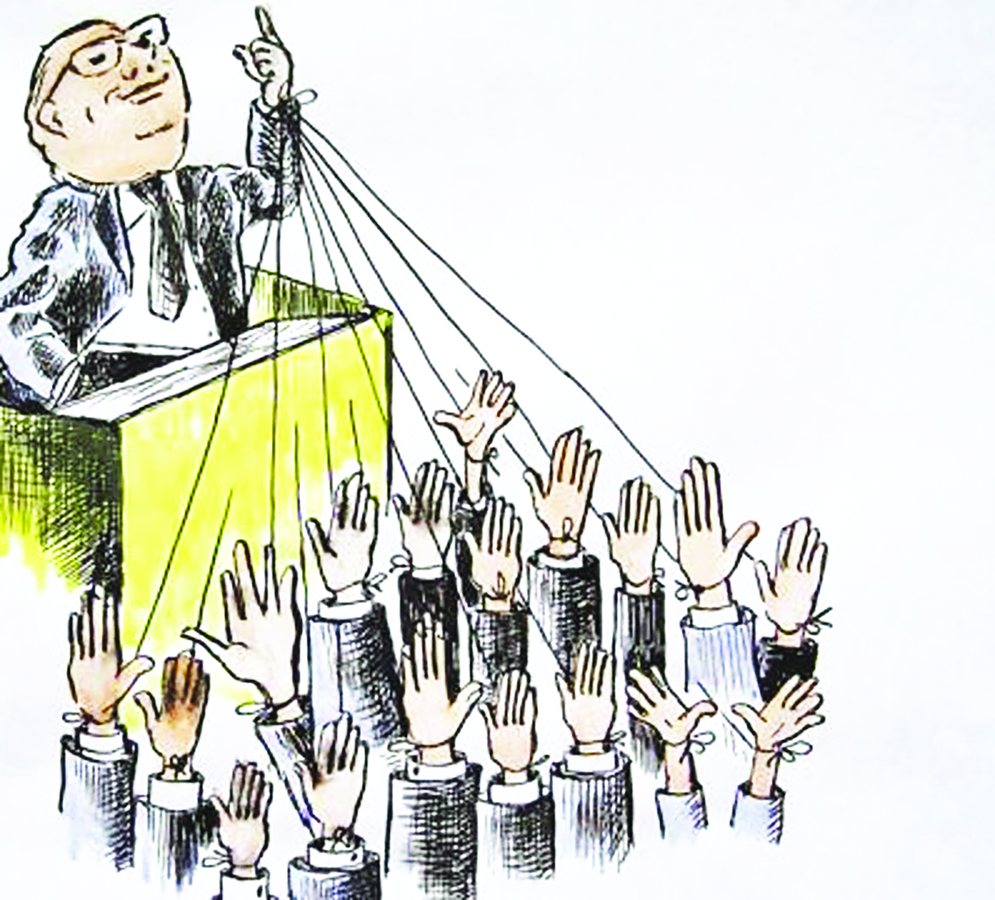
At the Head of the Pathocracy
An essay on pathocracy, personality disorders, leadership, and the social need to protect civic institutions.

Look Within: Return to Mysticism
A cultural and social essay on the renewed interest in mysticism, alternative healing, and inward-looking traditions.