
Blazing Star: The Aspects of the Phoenix
A symbolic essay on the phoenix as a mythic image of rebirth, initiation, and spiritual transformation.
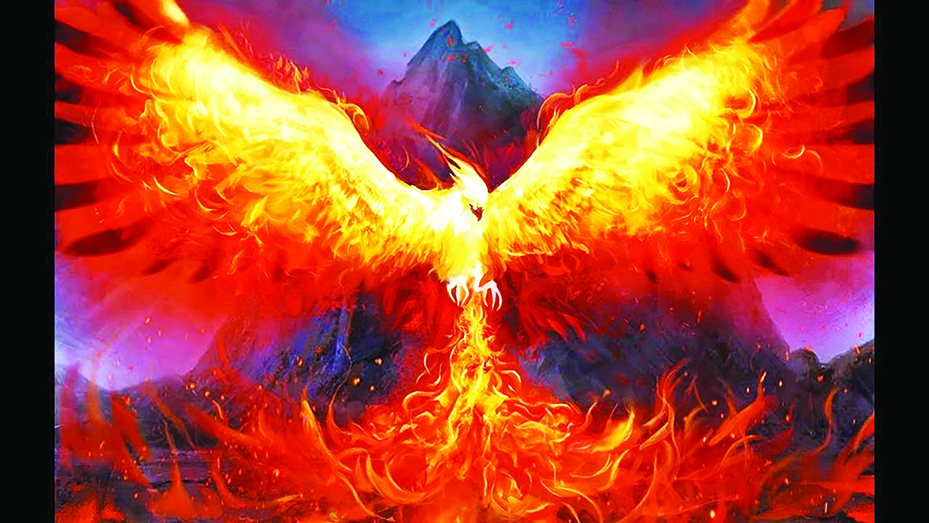
"Though the modern world may know a million secrets, the ancient world knew one - and that was greater than the million; for the million secrets breed death, disaster, sorrow, selfishness, lust, and avarice, but the one secret confers life, light, and truth."
Manly P. Hall
Religious and philosophical systems of symbolism, both pagan and Christian, have incorporated many divine and human attributes of birds.
Cruelty is symbolized by the buzzard, courage by the eagle, self-sacrifice by the pelican, pride by the peacock, and rebirth by the phoenix. The ability of birds to leave the earth and soar upward toward a source of light has led to their association with aspiration, purity, and beauty. Many earthly creatures were therefore given wings as a symbol of their efforts to overcome matter. Gravity, a law of the material world, is an impulse directed toward the center of materiality. Levitation, a law of the spiritual world, is an impulse directed toward the center of spirituality. Birds seem to be able to neutralize the effects of gravity, and therefore they share the nature of beings higher than earthly ones.
Angels were provided with wings because, like birds, they inhabit the air, the intermediate realm between earth and heaven-therefore angels are considered intermediate beings between gods and men. Just as the firmament was likened to a skull in the Gothic Mysteries, birds flying across the sky were considered thoughts of God.
The phoenix is the most revered of all the symbols used by ancient Mysteries to conceal the great truths of esoteric philosophy. Although modern scholars regard the Phoenix as a mythical creature, Pliny describes the capture of one of these birds and its exhibition in the Roman Forum during the reign of Emperor Claudius.
Clement, one of the ante-Nicene Church Fathers, described the nature and habits of the Phoenix in the first century after the birth of Christ as follows:
"There is a bird called the Phoenix. It is unique in its kind, and lives five hundred years. And when its time comes to die, it builds itself a nest of myrrh and other fragrant materials, settles in it, and dies. But as a result of its decomposition, a worm is produced, which... grows feathers. When it gains strength, it picks up its nest, containing the bones of its parent, and brings it from Arabia to Egypt, to the city of Heliopolis... It places the nest on the altar of the sun, after which it rushes back. The priests then check their records and find that exactly five hundred years have passed."
Although he admitted he had not seen the Phoenix (at that time, only one member of this genus was said to be alive), Herodotus gives a similar description: "They tell a story that does not seem credible... the Phoenix first makes a ball of myrrh, as large as he can carry, then he makes a cavity in it and places the parent in it, after which he seals the hole with fresh myrrh, and the ball weighs exactly the same as the original ball. He brings it to Egypt and places it on the altar of the sun."
Herodotus and Pliny note the strong similarity in form between the phoenix and the eagle. It is crucial to know and understand this observation, as it is reasonable to assume that the Masonic eagle is, in fact, a phoenix. The Phoenix's body is described as being covered with glossy crimson feathers, and its tail consisting of blue and red feathers. Its head is light-colored, and there is a golden plume on its neck. On the back of its head is a distinctive tuft of feathers.
The Egyptians sometimes depicted the Phoenix as a creature with a human body and the wings of a bird. Since the Phoenix was a symbol of rebirth, the feathers on its head could have symbolized the activity of the pineal gland, or third eye, whose occult function was well understood by the ancient priesthood.
The Phoenix is a bird associated with the sun, and its lifespan of 500 to 1,000 years was used as a standard for measuring the paths of celestial bodies, as well as a time cycle used in the Mysteries to denote periods of existence.
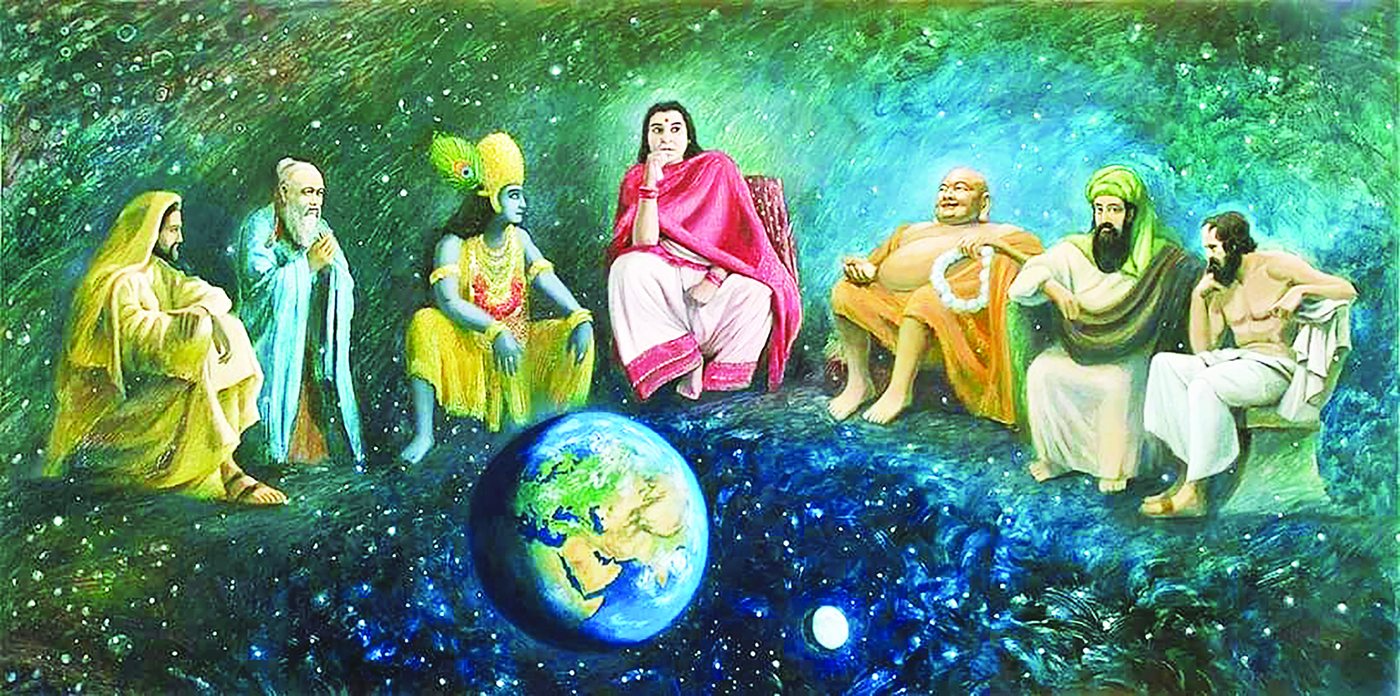
The Phoenix, the mythological Persian bird Rukh, is also the name of a southern constellation and, therefore, has astronomical and astrological significance.
But in all likelihood, the Phoenix was multi-faceted: It was the swan of the Greeks, the eagle of the Romans, and the peacock of the Far East. For ancient mystics, the Phoenix was the most fitting symbol of the immortality of the human soul, a symbol of spiritual victory and achievement. Because, according to ancient beliefs, just as the Phoenix, turning to ashes every 500 years, is reborn from the dead in each new historical cycle-and seven such cycles form an era that also repeats itself seven times-the spiritual nature of man is again and again triumphantly reborn in the physical body.
Medieval Hermeticists viewed the Phoenix as a symbol of the completion of alchemical transformation, a process equivalent to human rebirth. The name "Phoenix" was given to a secret alchemical formula.
The pelican of the Rose Cross, known to us as one who feeds a baby with its own flesh, is in fact a Phoenix, as can be seen from a careful examination of its head.
In the Mysteries, it was customary to refer to initiates as Phoenixes, or people who had been reborn. For just as physical birth leads to human consciousness in the physical world, so the neophyte is born into the consciousness of the spiritual world. Jesus on the mystery of initiation: "Very truly I tell you, no one can see the kingdom of God unless they are born again" (John 3:3).
Modern Masons understand the specific Masonic significance of the Phoenix, because the bird in their depictions uses acacia branches to build its nest. Some brothers can solve many of their problems in understanding secret esoteric doctrines when they understand that the single- or double-headed eagle is a phoenix, and that for all initiates, the phoenix is a symbol of the transformation and rebirth of creative energy, commonly recognized in Masonic writings as the completion of the Great Work.
There are many ways the Phoenix shows itself through history, and many ways to see it. This great bird begs the question, how does rebirth play into your life, and how can starting anew or making a new start benefit you today? Whether it is a personal journey or part of an organized practice, the Phoenix offers a path to that one secret.
More from Culture
Flow: Silence Speaks Louder Than Words
A review of Gints Zilbalodis's animated film Flow, where quiet images become a meditation on survival, empathy, and community.

Bite-Size Comedy
A light humor page of short jokes and comic observations for a quick magazine break.
Thomas Cole's Journey of Life
An art feature on Thomas Cole's four-part Voyage of Life series and the American landscape tradition.