
Thomas Cole's Journey of Life
An art feature on Thomas Cole's four-part Voyage of Life series and the American landscape tradition.
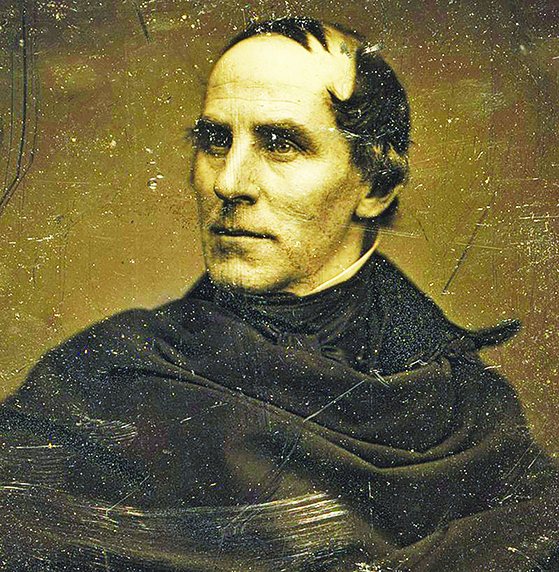
AMONG THE TREASURES OF THE WASHINGTON ART MUSEUM THERE IS A SERIES OF FOUR PAINTINGS WHICH I ALWAYS HURRY TO LOOK AT FIRST.
Thomas Cole, born in 1801 in England, became a major American artist of the 19th century. Focusing on historical and landscape paintings, one of his important contributions was The Voyage of Life, a series of four paintings with the titles Childhood, Youth, Manhood, and Old Age. I was eager to see these works in person and learn more about the man who made them.
Childhood
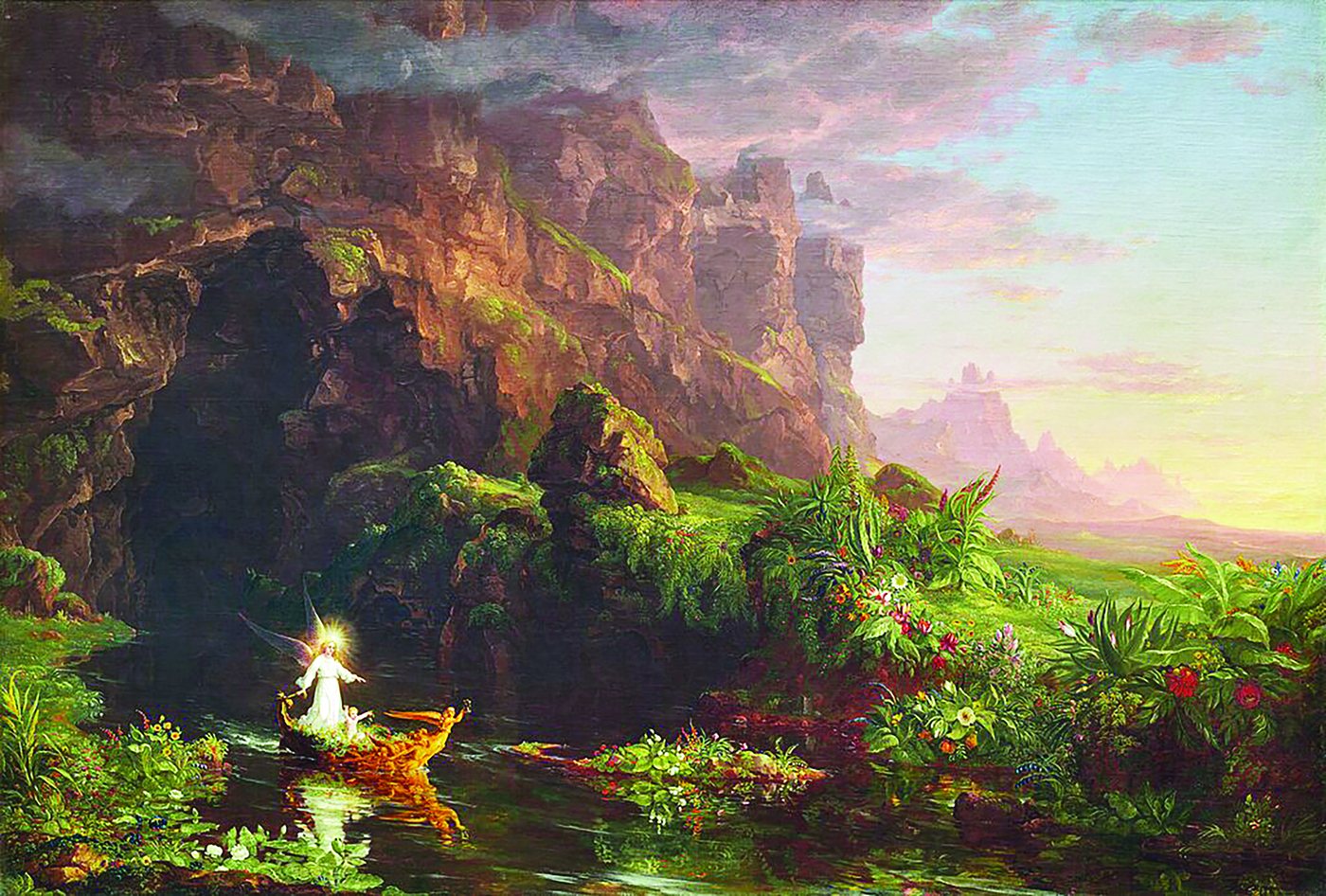
On February 1, 1801, Cole was born in Bolton, Lancashire. With his parents, he headed to the United States in 1818. He spent time in cities including Philadelphia, Ohio and Pittsburgh, where he found work painting portraits as a self-taught artist. His work was shown in exhibitions of the Philadelphia Academy, and he worked with members of the group.
While in the Catskills region of New York state, Cole was inspired by the beauty of the land. He created small landscape paintings which would spark his fame. The work caught the attention of the artist Asher B. Duran, as well as important New York critics and artists. Duran became a life-long friend. Cole became a member of the National Academy at twenty years old.
Youth
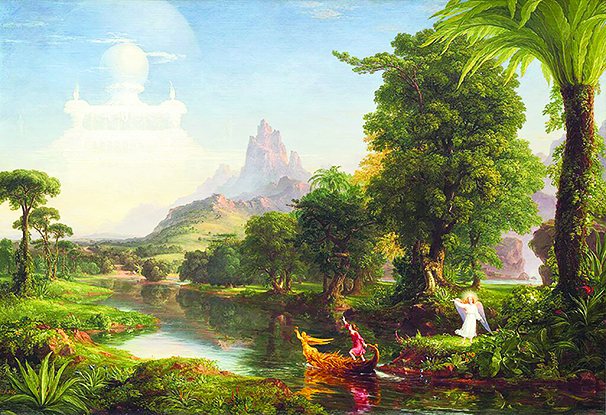
For several years starting in 1829, Cole went overseas. He visited Italy and France, and went to England to learn the family business. For him, this journey was very fruitful and happy. While abroad, he connected with affluent Americans who commissioned work from him, further cementing his status and adding to his reputation.
When Cole came back to New York in late 1832, an exhibition of his European paintings caused a stir. Returning to the land that made him famous, Cole found a farm called Cedar Grove in Catskill, New York, and made a small, rented outbuilding there into his studio.
At this time, he connected with Luman Reed, an entrepreneur from Coxsackie, New York who ran a private art gallery and who became his patron. For Reed, Cole created The Way of the Empire, an acclaimed series of paintings which show the harmful effects of industry on nature. Cole referred to railway builders as "barbarians with an iron heart."
Manhood
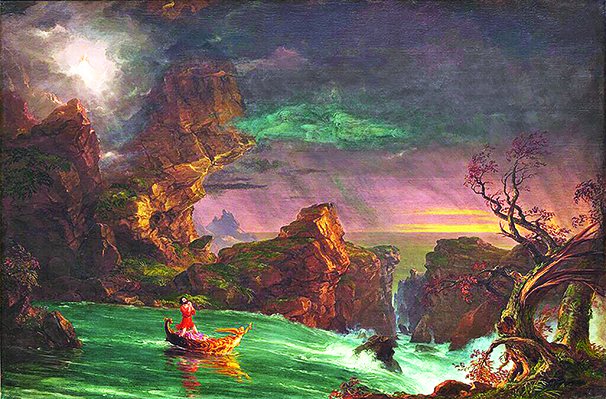
In 1836, Cole experienced many life changes. His father passed away, as did Luman Reed. On November 22, 1836, Cole married Maria Bartow at Cedar Grove and settled there. Many great writers and artists of the day, such as James Fenimore Cooper, visited them. Records of visitors, written on visiting cards, can be seen at the Albany Institute of History and Art. Interestingly, the pair lived on the second floor of their house. Their first child, Theodore Alexander Cole, arrived January 1, 1838.
Cole's next notable commission was a series of four paintings called The Voyage of Life. In March 1839, the commission was accepted for $5,000, a large sum at the time. The work was completed in December of 1840. It was commissioned by Samuel Ward, a philanthropist and banker, who passed away one month before the canvases were done-without ever seeing them.
In 1841, Cole travelled again, this time to Switzerland as well as to France and Italy, also making the rounds to Great Britain to see relatives. He was welcome everywhere that he went.
Meanwhile, disagreements were stirring among heirs to Samuel Ward's estate, which now included Cole's The Voyage of Life series. While in Italy, Cole painted a second version of The Voyage of Life paintings and sent them to New York.
In July 1842, he headed back to the U.S. aboard the Great Western steamer. Once home, he decided to become a member of the Episcopal Church of St. Luke in Catskill, New York, and to be baptized in the Episcopal Church. There, he befriended Reverend Louis L. Noble, and helped out by designing a new church building.
In the next year and those that followed, Cole started worrying about finances and the market for selling paintings. To make ends meet, he published some of his poems and letters in certain New York magazines and newspapers, and became a teacher. Cole accepted the student Frederick E. Church, from May 1844 to June 1846, whose wealthy father paid $300 annually for the education. He took on another student, Benjamin McConkey, on the same terms.
Old age
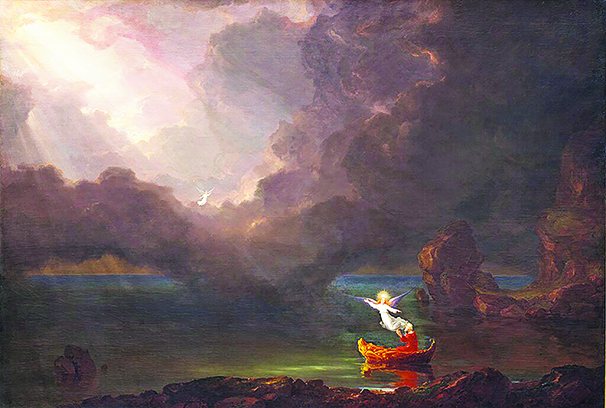
Cole started a series of paintings called Cross and Peace in February 1846. Around that time, a second studio was constructed, separate from the main home. This was called the "New Studio" and Cole proudly showed it off to visitors.
However, he did not have much time left. One day, after attending a morning church service, Cole became tired in the afternoon and a doctor was called later that night. Due to pleurisy and a hemorrhage in the lungs, he died on February 11, 1848, at the main house at Cedar Grove. On February 15, the funeral was held in the church of St. Luke, but was sparsely attended due to biting cold weather. Cole's final resting place is Thomson Street Cemetery.
Eternity
The region has found ways to honor this great artist. Cedar Grove, the farm in the Catskills where Cole painted when he returned to New York, is now part of the Thomas Cole National Historic Site. His home, the Thomas Cole House, was declared a National Historic Landmark in 1999 and is open to visitors. The landscape which initially inspired him also bears his name: the fourth tallest peak in the broader Catskill Mountains is now known as Thomas Cole Mountain.
More from Culture
Flow: Silence Speaks Louder Than Words
A review of Gints Zilbalodis's animated film Flow, where quiet images become a meditation on survival, empathy, and community.
Blazing Star: The Aspects of the Phoenix
A symbolic essay on the phoenix as a mythic image of rebirth, initiation, and spiritual transformation.

Bite-Size Comedy
A light humor page of short jokes and comic observations for a quick magazine break.