
The Human's Words
Peter Shmakov's story of Father Vlad, dreams, faith, doubt, and the strange human search for meaning.
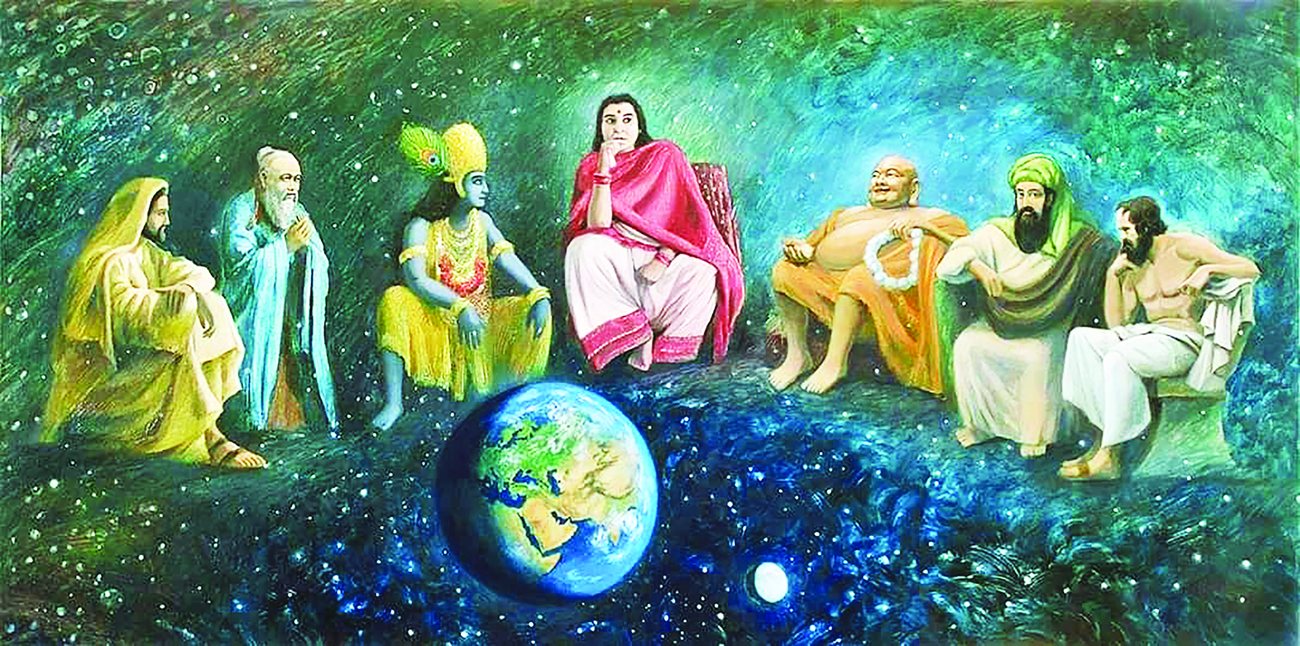
When Father Vlad was forty-five years old, he began to go crazy. At least it seemed like that to him. He served in a small church beyond the village, but not as the official rector. The career of Father Vlad was indifferent to titles. Such a man. Church gossip, which intensified after the fall of Soviet Power, did not interest him. He just loved his work and tried to do it properly. He read a lot and knew Hebrew well-well enough to be heard sighing as he compared the original with a Synodal Translation. Not everything between the versions was as symmetrical as he liked, but he was sure of the main strength of the book.
He started a family early in life. Beyond an adult daughter who graduated from the University's chemistry department and entered the research institute, there were no other children. The wife of Father Vlad, a quiet and not too intellectually concerned woman, graduated from school, yet did not work other than engaging in gardening. Together, they lived in a small private house quite modestly. No stressful situations have been observed so far, thank God. Moreover, the phenomena of disturbances seemed mysterious to Father Vlad, because you could not call them events, just a mood which prevented him from relaxing. Father Vlad himself would find it difficult to explain if anyone asked why he was so excited. After all, he would simply awake with his head full of nonsense, strange dreams at dawn. For some reason, it was at dawn.
In short, the Buddha began to visit the dreams of father Vlad in person. In the dream, Father Vlad suffered from heat, dust, thirst and often hunger-but stubbornly dragged himself and followed an elderly man, modestly dressed in a typical Indian white linen chiton which flowed like a sari. His worldly appearance did not reveal the struggle of his dreams. As he lay with his eyes closed, his face gave the impression of thoughtfulness or even self-indulgence. Father Vlad felt just fine upon waking, except that that he felt disconnected, a moat between him and life. Other than this he felt like himself, and not some other person, as sometimes happens in a dream.
It is hard to say what affected Father Vlad most of all. Usually, after such a dream, he fluttered around the church, a tormented bat, baptized in fussiness, as if he was trying to throw an unclean force out of himself. The Buddha in the dream, however, did not resemble any unclean power, on the contrary, he fully met all the criteria of the righteous. He preached, and in the dream, Father Vlad understood him well, although he tried to ask tricky questions. Something tormented him in his sleep, but until he woke up, he could not understand exactly what.
The main thing, of course, is that the Buddha did not make any clear statements regarding God, in which Father Vlad believed in, in his dreams and in waking life. Most often in the dreams, he was asked to pay attention to other things. If the Buddha had said that he did not believe in God, then, it seemed to Father Vlad, he would have stopped dreaming. Father Vlad knew perfectly well the foundations of Buddhism, about the Four Noble Truths and the Eightfold Path. First of all, Buddhism never explicitly interested him, yet in the dreams, Father Vlad's attitude towards the Buddha and completely changed.
The dream aroused an insurmountable desire to plunge deeper into all this. Buddhism, which did not yet exist to Father Vlad except in his dreams, had awoken something puzzling in him. Through his admiration of Buddha, he had an unexplained sense of betraying...his own identity. He stopped understanding himself. "What the heck is this?" he thought to himself. He began to read books on Buddhism, to understand its directions and schools. Yet except for stirring his academic interest, nothing lively and creative arose.
Another thing to address was his sleep. What to do? Father Vlad decided to hide his madness, feeling he could not explain it to anyone who did not understand. Most importantly, he was struck by the reliability of dreams. He now knew what central India looked like, the Ganges River, and the Buddha itself, which was the most amazing part. He also remembered some of the students. Unlike many people who forget dreams upon waking, he was able to explicitly recall their appearances in detail. He remembered that, like himself, they went in a rush and rags and castoffs, and ate only what was necessary. Still in his memory was the dust, heat, and snakes. Although the outer appearance of Father Vlad did not change, he perceived himself as a participant in those events and as man of that distant era. Neither strange customs nor clothes surprised him there.
This continued for some time, and then stopped, as the cow slimed with its tongue. Father Vlad should have been relieved, yet on the contrary he was bored. In the dreams, he felt the meaning and greatness of what was happening. In his own church, he would watch the routine and parishioners, who did not arouse much inspiration. Although Father Vlad did not admit this to himself, he suspected pride drove them more than spirituality. His appetite left him. Even his wife started noticing something was amiss. For some reason, Father Vlad, even at the confession of the archpriest, who communed to him, did not tell anything about his dreams, although he was tempted to. By mature reflection, he decided that he did not violate any commandments with these dreams, and therefore did not have to talk about them in confession.
Several months passed and Father Vlad began to calm down and return to normal, when he again was visited by a dream from the same realm. While sleeping, he saw the death of the Buddha. In the dream, he himself was an old man and sat next to the dying. He hardly blessed the students and punished them for looking at their teacher, he understood he alone was to comprehend the teaching and forge his own path. He died without any nirvana, and in the most ordinary way. But for Father Vlad, this most ordinary death resulted in a dream in unbearable grief. He did not care about the greatness of the famous teacher, but grieved simply and humanly. Only in grief did he comprehend everything the teacher tried to find, and the doom of love for temporary forms. He knew that nothing else, besides time forms, you will not love, and what is from this doomed love is some unknown way out, and not even a way out, but the continuation of this doomed love into some endless joy, about which nothing intelligible can be said, but you yourself need to silently and stubbornly beat your lonely path to her, to beat with focus, creatively, in your unique way, falling and getting up again, not despairing. But how many times he fell, how many times he got up, and there may even be more than one life. The main thing is to not stop, and then grief, loss and doom will melt into an eternal and indestructible meeting. And who is there at the end of the journey? The only object of love that prompted you to begin the path, or the one that combines all the loves of all doomed? You will find out later.
More from Culture

Flow: Silence Speaks Louder Than Words
A review of Gints Zilbalodis's animated film Flow, where quiet images become a meditation on survival, empathy, and community.

Blazing Star: The Aspects of the Phoenix
A symbolic essay on the phoenix as a mythic image of rebirth, initiation, and spiritual transformation.

Bite-Size Comedy
A light humor page of short jokes and comic observations for a quick magazine break.